Executive summary: Email spoofing is a growing cyber threat where attackers forge the sender’s address to impersonate trusted sources, enabling phishing, business email compromise, and financial fraud. Because legacy email protocols like SMTP lack strong authentication, spoofing can bypass traditional filters. Organizations can mitigate this risk by implementing robust email authentication measures, especially DMARC. Solutions like Red Sift OnDMARC automate and streamline SPF, DKIM, and DMARC enforcement, add advanced DNS monitoring, and provide clear insights, helping businesses prevent unauthorized use of their domains and protect brand integrity.
3 Key Takeaways
- Email spoofing exploits weak authentication in standard email protocols, enabling attackers to impersonate trusted senders for phishing and fraud.
- DMARC, along with SPF and DKIM, provides a powerful defense, allowing organizations to quarantine or reject unauthorized emails before they reach inboxes.
- Red Sift OnDMARC offers rapid deployment and ongoing AI-powered protection, combining automation, DNS monitoring, and full visibility. With faster threat resolutions and actionable insights, powered by Red Sift Radar.
Email spoofing is a rising threat, where attackers forge an email’s sender address to appear as a trusted source. This tactic underpins many cyberattacks, from phishing to business email compromise (BEC), and it can have devastating consequences for both organizations and individuals.
Email spoofing is when attackers send messages with a faked “From” address, making their emails look like they’re from a legitimate sender. The goal? Trick recipients into handing over sensitive details, transferring money, or clicking on malicious links. Because traditional email protocols like SMTP were not designed with strong authentication in mind, spoofing remains an all-too-easy trick for bad actors.
Common types of email spoofing attacks
- CEO fraud: Attackers impersonate senior executives, such as CEOs or CFOs, to instruct employees to move money or share confidential data.
- Lookalike domains: A domain almost identical to the real one is registered by the attacker (e.g., replacing “l” with “1”) to fool the target.
- Phishing and BEC: Spoofed emails are used to trick users into giving up passwords, financial info, or approving fraudulent payments.
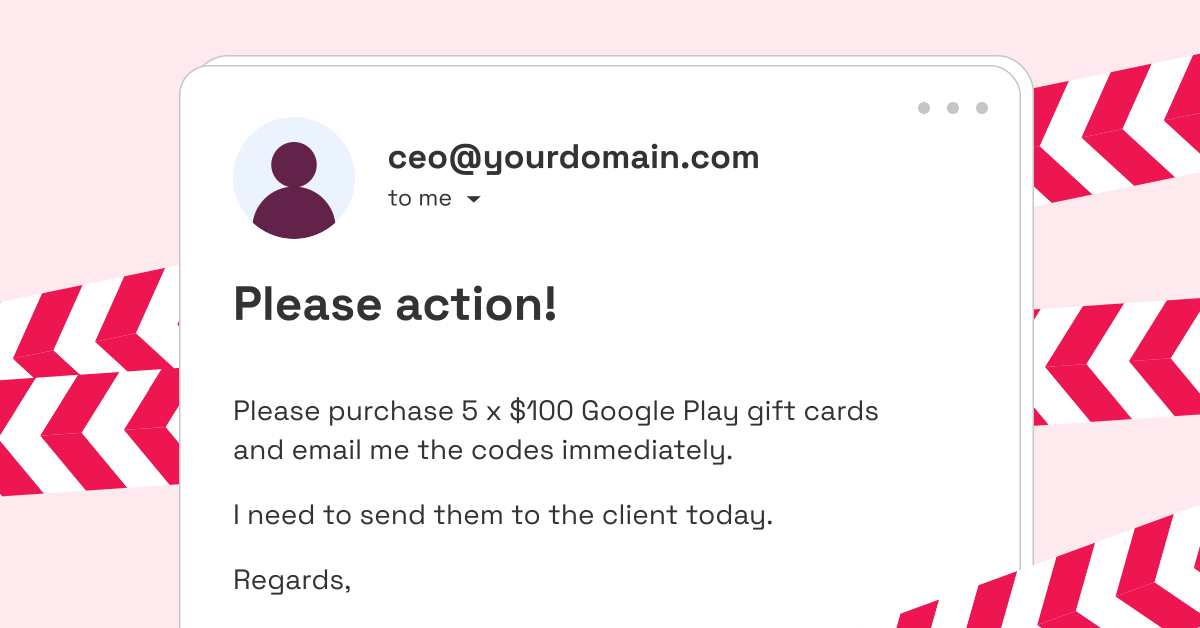
Recognizing the signs of spoofed emails
Spoofed emails have become increasingly sophisticated, but some clear signs include:
- Sender addresses that don’t match the display name.
- Urgent or unexpected requests for sensitive data or payments.
- Unusual language, poor grammar, or generic greetings.
- Slightly altered domain names (e.g., “paypa1.com” instead of “paypal.com”).
See how to spot a spoofed email, from Enterprise Account Executive, Nicole Spiller.
Why traditional security isn’t enough
Standard email gateways and filters can catch many threats, but spoofed emails often evade these defenses, especially when attackers use convincing sender addresses or domains. To truly eliminate the risk of spoofed messages reaching user inboxes, domain owners need a solution that prevents unauthorized senders from being able to use their domain at all.
The best layer of defense against email spoofing is to implement Domain-based Message Authentication, Reporting, and Conformance (DMARC), an email authentication, policy, and reporting protocol. You can think of DMARC like a security guard for your outbound emails. The protocol will choose to either allow all emails to pass into the users inbox when set to a policy of p=none, quarantine potentially spoofed emails, allowing security teams to review before the mail arrives, or reject any phishing attempts all together, a key benefit of a DMARC enforcement (policy of p=reject).
Red Sift OnDMARC: The award-winning gold standard in email authentication
Red Sift OnDMARC takes a proactive, comprehensive approach to stopping email spoofing and protecting organizations from domain impersonation.
How OnDMARC works
At its core, OnDMARC uses the latest email authentication standards, enhanced with Red Sift’s unique DNS Guardian:
- DMARC: Ensures only authorized senders can use your domain. Any unauthorized sender’s email can be quarantined or rejected outright.
- SPF & DKIM: These protocols add extra layers of authentication, preventing impostors from faking emails from your domain.
- DNS Guardian: Ongoing monitoring for DNS misconfigurations and subdomain attacks, plugging gaps that other solutions miss.
Key benefits of OnDMARC
- Rapid deployment: Most organizations reach full DMARC enforcement (the gold standard of protection) in 6–8 weeks, thanks to powerful automation and step-by-step guidance.
- Automated management: Easily manage SPF, DKIM, DMARC, BIMI, and MTA-STS records from a single dashboard—eliminating manual errors and saving admin time.
- Dynamic SPF: Bypass the notorious SPF 10-lookup limit with a single dynamic include, keeping your email deliverability strong even as your sending ecosystem grows.
- Clear visibility: Real-time dashboards and forensic reports provide instant insights into who’s using your domain and which emails are passing or failing authentication.
- AI-powered insights: Integrated with Red Sift Radar, security teams save time and money by finding errors and resolving solutions 10x faster.
- Boost brand recognition with BIMI: Display your verified logo in supported inboxes and proactively monitor for look-alike domains trying to impersonate you with Brand Indicators for Message Identification.
- Easy setup and API access: Automation, user-friendly guides, and API integrations make protecting your domain seamless, even for organizations managing complex environments.
Ready to take control of your email domain?
Stopping email spoofing isn’t just about protecting your inbox—it’s about safeguarding your brand, finances, and reputation from evolving cyber threats.
Red Sift OnDMARC makes this achievable for organizations of all sizes, with an award-winning customer success team and best-in-class technology.
Not sure where to start? Get started for free with a 14-day trial.


With exceptional email security knowledge and industry experience, Faisal is hands-on and dedicated CSE for Red Sift.