Key findings
Red Sift and Entrust found that visible logos increased email opens, brand recall, and buying responses. The study surveyed 1,026 people in the US and UK and compared responses to the same emails at baseline and with logos added using BIMI.
- When a brand showed a logo and its competitor didn't, opens rose 21% in the US and 39% in the UK.
- The unfamiliar brand drew more participant responses when its logo was visible.
- Younger participants showed the largest visible-logo response differences.
- BIMI supplied the visible-logo treatment, while DMARC enforcement remained an underlying eligibility requirement.
How was email logo visibility tested?
The study surveyed 1,026 participants, including 626 in the UK and 400 in the US. Participants were grouped into ages 18 to 29, 30 to 39, 40 to 49, 50 to 59, and 60 and older.
Researchers compared responses to the same test emails before and after a visible logo was added. The scenarios covered transactional email, promotional email, brand recall, buying responses, and awareness of BIMI.
Headline findings
Finding (logo vs no logo) | US | UK |
Share of email opens gained when a brand showed a logo and its competitor did not | +21% | +39% |
Unfamiliar control brand's share of promotional opens once it showed a logo | +21% | +62% |
Buying share the logo-showing competitor took from a no-logo market leader | +34% | +32% |
BIMI and logo visibility in email
As of 2026, BIMI is not limited to registered-trademark logos, and logo display isn't guaranteed on every authenticated message. Check the current provider and certificate requirements before implementing BIMI.
BIMI lets eligible senders publish a brand logo for participating mailbox providers to display. The logo doesn't appear on every authenticated email. Display depends on the sender meeting the provider's current BIMI requirements.
This section gives context for the visible-logo experience examined in this research. The study looks at how consumers responded when a brand logo appeared in the avatar position beside an email.
Why does BIMI depend on DMARC?
DMARC (Domain-based Message Authentication, Reporting and Conformance) is an email authentication policy that helps protect a domain against exact-domain spoofing. BIMI builds on DMARC enforcement. It doesn't replace email authentication or guarantee that a provider will display the logo.
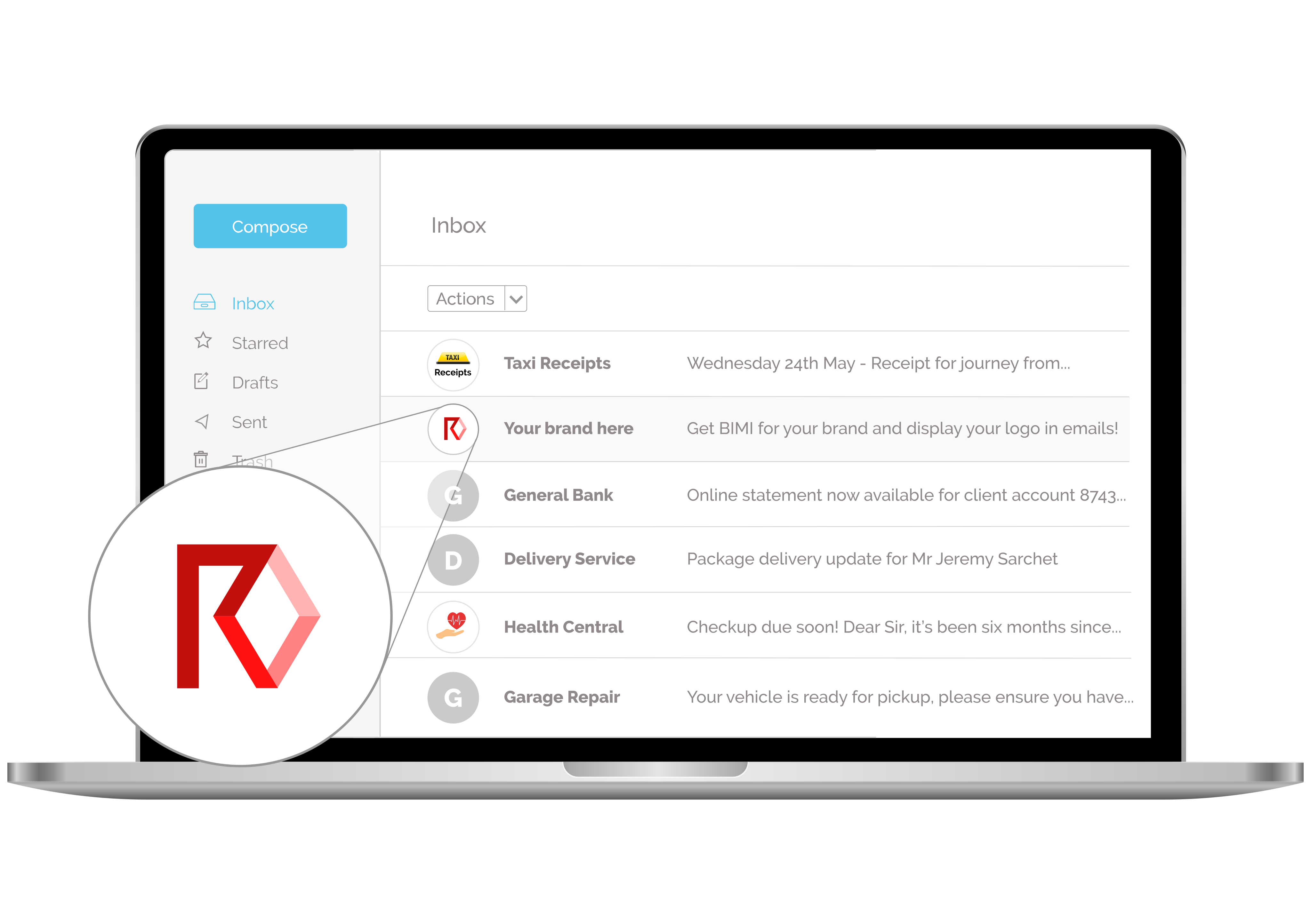
The impact of logo visibility on email open rates
Visible logos lifted email open rates in the study. When a brand showed a logo and its competitor didn't, opens rose 21% in the US and 39% in the UK. We looked at logo visibility, shown via BIMI, across both transactional and promotional email in the US and UK.
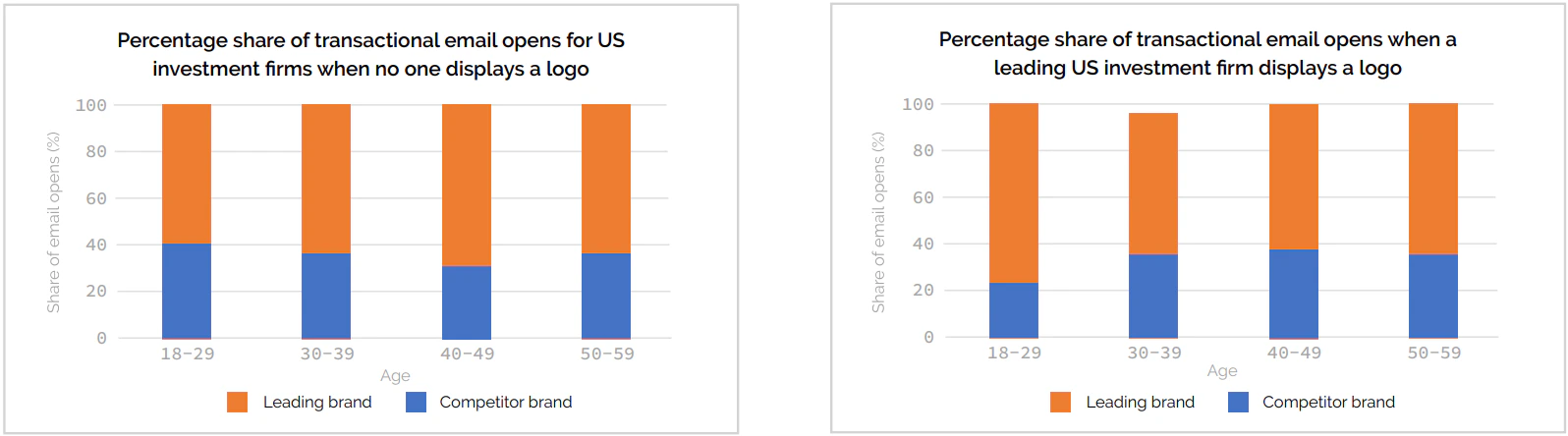
How does logo visibility affect transactional email opens in the US?
Transactional email is the backbone of most customer communication. In the US we looked at how displaying logos with BIMI affected the open rates of transactional emails from two investment firms. When it displayed a logo, a leading financial investment organization saw a 6% increase in its share of opens, while a competitor's fell by 10%.
How does logo visibility affect transactional email opens in the UK?
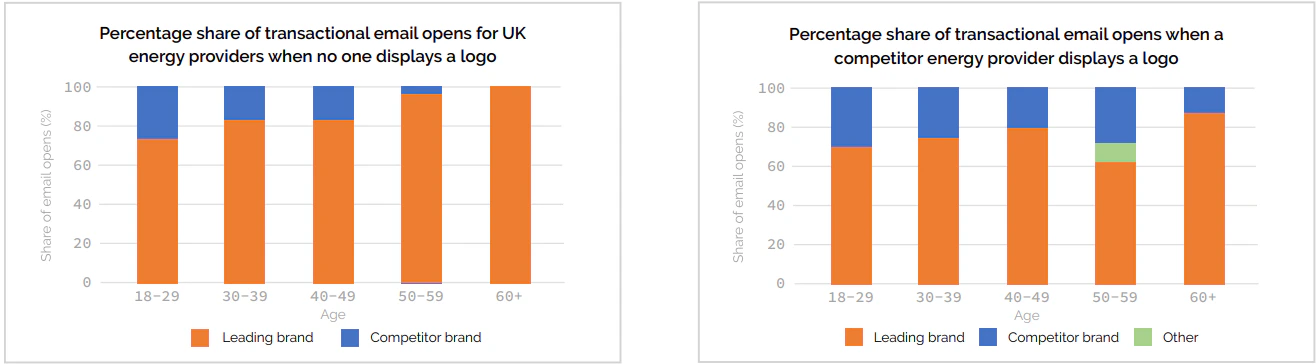
The UK showed similar findings. We ran the same experiment with a leading energy provider and a competitor, this time with the competitor displaying logos. Even though the leader's email sat at the top of the inbox, the competitor raised its own share of opens by 38% while the no-logo leader lost 11%.
Does this trend carry over to promotional email?
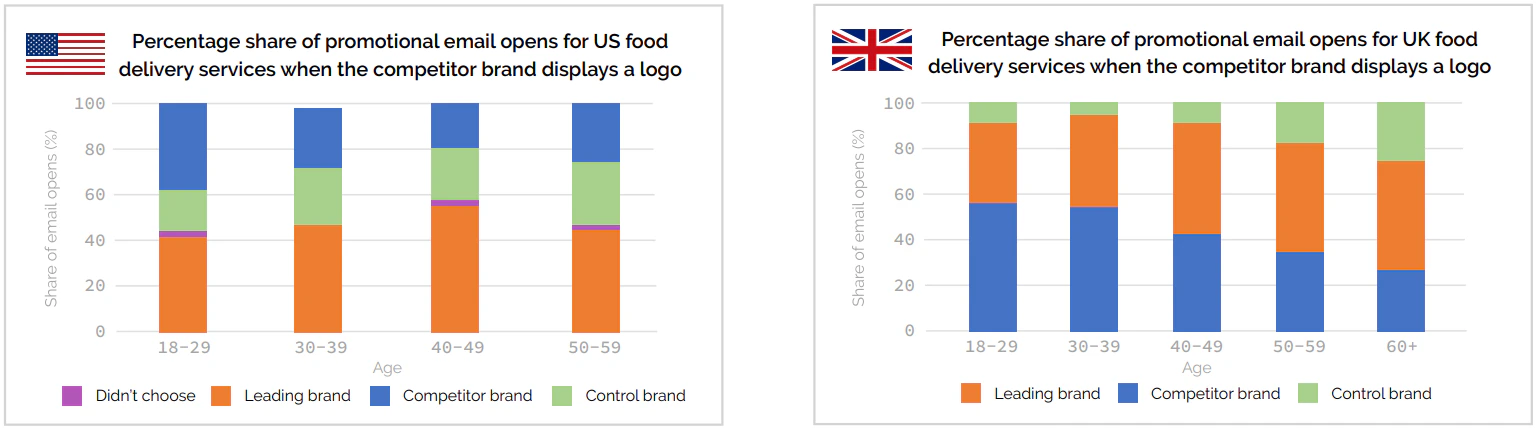
Transactional emails matter for existing customers, but the same test on promotional email showed the same pattern. We measured how visible logos changed the open rates of popular food delivery brands in the US and UK against their competitors.
With no logo shown for any brand, the leading US brand reached a 56% open rate and the leading UK brand 61%, against 25% and 31% for their competitors. Even without a logo, the leading names stay strong with their existing base.
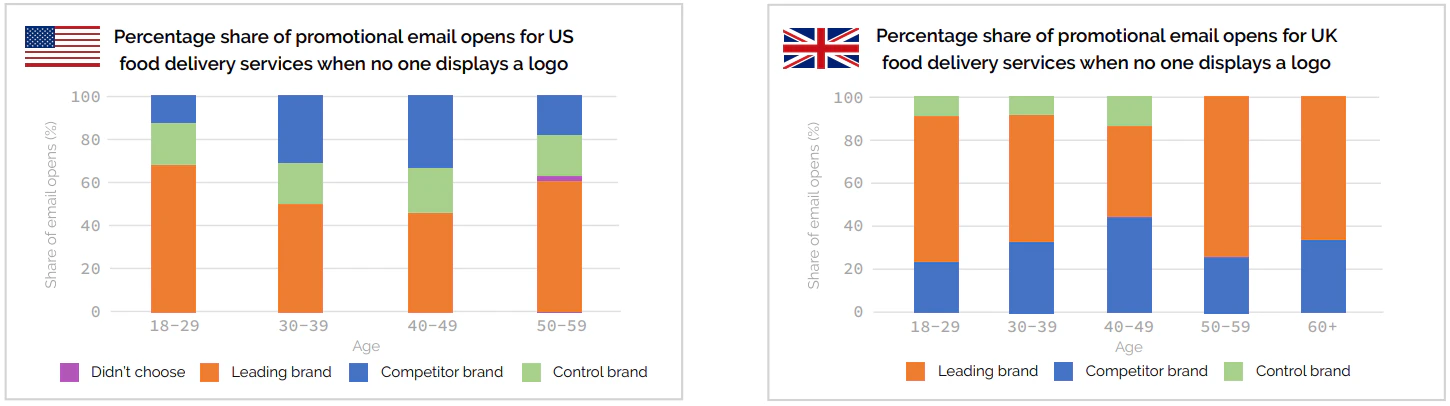
When only the competitor showed a logo, the leading US and UK brands lost 15% and 18% of their share of opens, while the competitors gained 14% and 39%. Logo visibility correlates with more opens on promotional email.
Can a first-time logo still encourage opens?
Including a completely unknown brand as a control let us judge the effect of a logo on its own. Using a business with no market share or prior reputation, the control brand's results were the most surprising. With a logo shown, it gained 21% share of promotional opens in the US and 62% in the UK, compared with itself without a logo.
What do these findings tell us about visible logos and open rates?
The data shows that adding logos to both transactional and promotional emails lifts open rates. Overall, when a brand's emails had a logo but a competitor's did not, opens increased by 21% in the US and 39% in the UK. Most striking, the effect held regardless of market share or brand size.
When a brand's emails had a logo but a competitor's did not, opens increased by 21% in the US and 39% in the UK.
Does a logo make it easier to recall a brand?
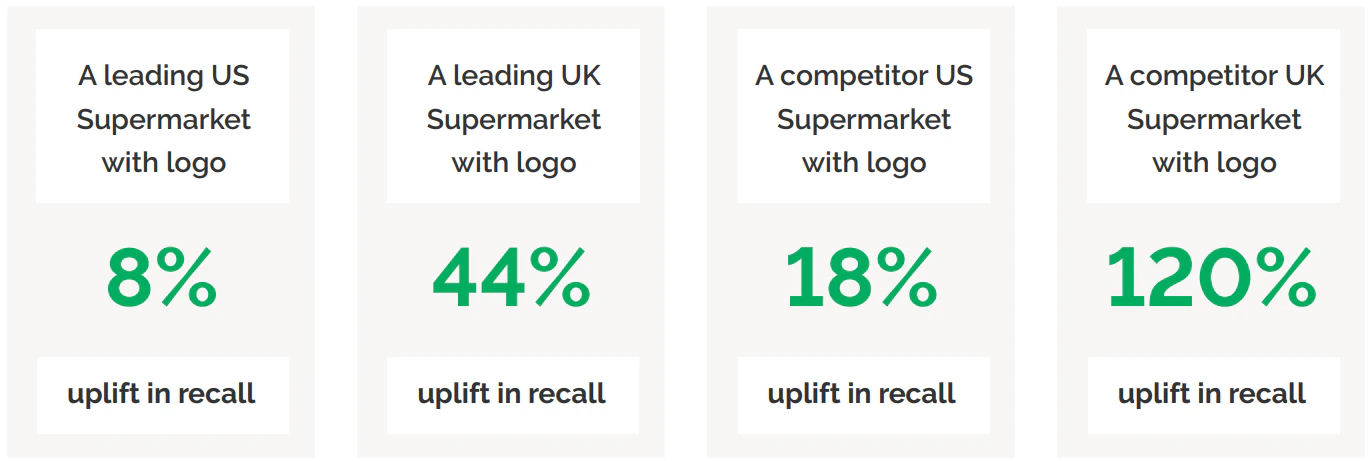
Brand recall is a valuable metric. The better your market remembers you, the more likely they are to buy from you. To test whether a visible logo helps, we showed participants a series of emails from popular supermarket brands for five seconds and measured which were best recalled with and without a logo.
Emails shown with a visible logo were recalled more often than the same emails without one, though logo color and design affected how well each brand was remembered.
Can seeing a logo make a consumer buy more?
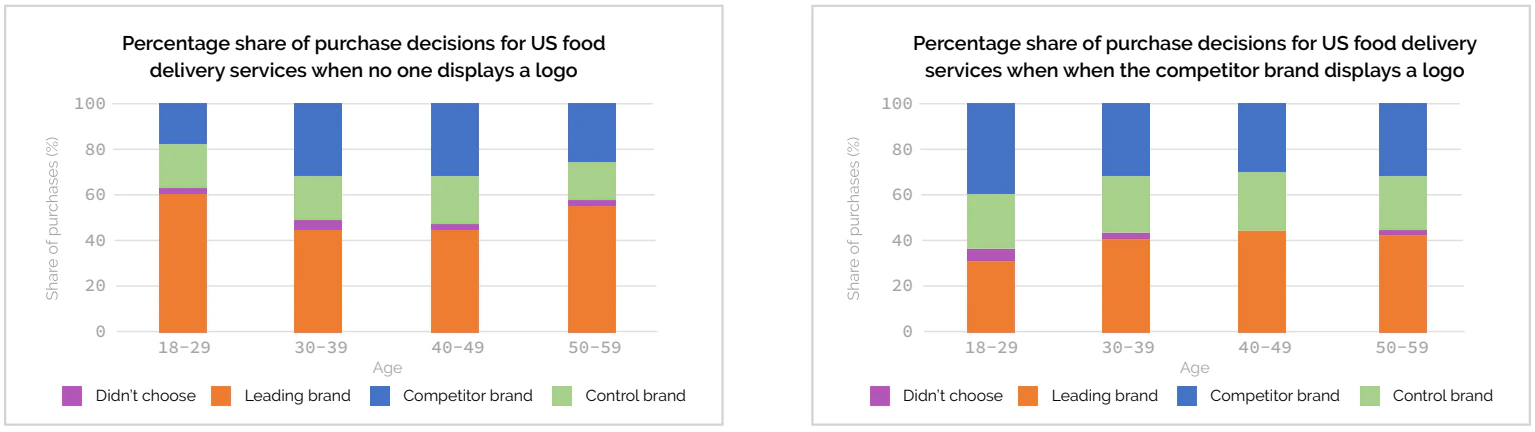
Visible logos also shifted buying behavior. In both the US and UK we compared purchasing decisions on emails from leading and competitor food delivery brands, and the brands that showed a logo took buying share from those that didn't.
Buying behavior in the US
In the US, a leading food delivery brand with more than half the market and no logo lost 24% of its buying share, while the competitor that showed a logo gained 34%.
Buying behavior in the UK
The UK showed the same pattern. Without a visible logo, a leading brand lost 39% of sales share, while its logo-showing competitor took 32%.
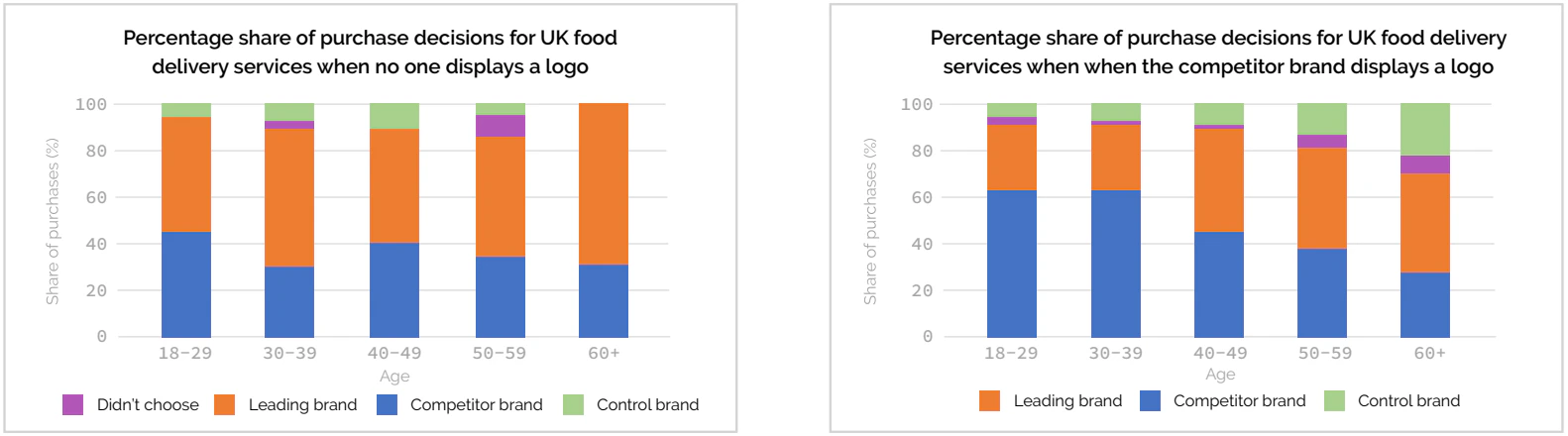
These results show how BIMI adoption and logo visibility can shift market share. Brands that add DMARC and BIMI now can take share from competitors that don't.
Logo visibility and the Millennial and Gen Z market
Email is still widely used by younger people, and throughout our research logo visibility had its biggest impact on interaction in these younger age groups, particularly Millennials and Gen Z.
- With no visible logo, Gen Z purchasing decisions dropped 28%.
- For critical financial decisions, brands with a visible logo saw 18% more Gen Z opens, while those with no logo fell 10%.
- For lower-involvement decisions, open rates without a logo dropped 14%, while those with a logo gained 28%.
What does this mean for businesses?
Generation Z already makes up a growing share of the workforce, and many businesses cater to this group. These younger generations are digital natives who grew up with technology. The findings support the likelihood that initiatives like BIMI will be what they expect as standard from the brands they buy from.